Presented by Ray Dawkins
Walk Right After 55
Four plain-spoken books on shoes, fit and steady footing, written like a friendly chat across the fence. Pick the one you need today, or take the whole set.
 by Ray Dawkins
Four plain-spoken books on shoes, fit and steady footing, written like a friendly chat across the fence. Pick the one you need today, or take the whole set.
by Ray Dawkins
You've worn the same size, in about the same style, for as long as you can remember. Lately something feels off. The shoes pinch where they never used to, or your heel slides, or the floor feels harder than it did. Nobody told you that your feet may not be the feet you bought those shoes for. These four plain-spoken books are the chat across the fence I wish everyone could have before they spend another dollar on shoes.
Picture a Saturday morning. You pull on the shoes you've trusted for years, the ones that never gave you any trouble. By lunchtime you're looking for a place to sit down. You tell yourself they must be wearing out, or you're getting fussy. Maybe you shrug and buy the same pair again, same size, same style, and the same thing happens.
Here's what hardly anyone says out loud: feet change as we get older. They can get longer and wider. The cushioning under the heel and the ball of the foot can thin. The size printed on the box was true once, for the foot you had then. It may not describe the foot standing in your kitchen today.
You don't need a new body. You need a better way of choosing, checking and caring for the shoes you wear. That's the whole idea behind this set. It isn't a gadget or a miracle insole. It's knowing how to measure both feet, how a shoe should fit, what the wear on the bottom is telling you, and when it's time to let a pair go.
So I split it into four books, because your questions come at different times. One is the complete reference. One clears away the habits and old sayings that cost people comfort and money. One is for the kitchen table, with checks, lacing tricks and cheap upgrades for the shoes you already own. And one is for the situations where footwear matters most: living alone, after a fall, or looking after feet that need extra care.
None of it is complicated, and none of it talks down to you. You've been walking for a long time. You just deserve a little straight talk about what's on your feet, and a clear word about when to put the book down and call your doctor or a podiatrist.
| The usual advice | Walk Right After 55 | |
|---|---|---|
| Sizing | Buy the size you've always worn. | Measure both feet, standing, late in the day, and fit the larger one. Treat the size on the box as a starting point. |
| New shoes | They'll loosen up. Just break them in. | A shoe should fit from the first try-on. Don't count on stretching. |
| Price and brands | Long lists of top picks and big-name favorites. | No brands named, rated or ranked, and no affiliate links. You learn what to look for and judge for yourself. |
| Worn-out shoes | Wear them until they fall apart. | Simple home checks tell you what's worn, what can be helped cheaply, and when replacing is the smarter move. |
| At home | It's only the house, so anything goes. | A plain look at slippers and socks on smooth floors, and what to look for in a closed-back, non-slip house shoe. |
| Foot trouble | Buy an insert and hope. | Inserts can add comfort, but they are not a diagnosis or a cure. For pain, swelling, numbness or diabetes, we send you to a doctor or podiatrist. |
| Tone | Technical jargon, or fear to make you act. | Short sentences, common words, every term explained, and no scare tactics. |
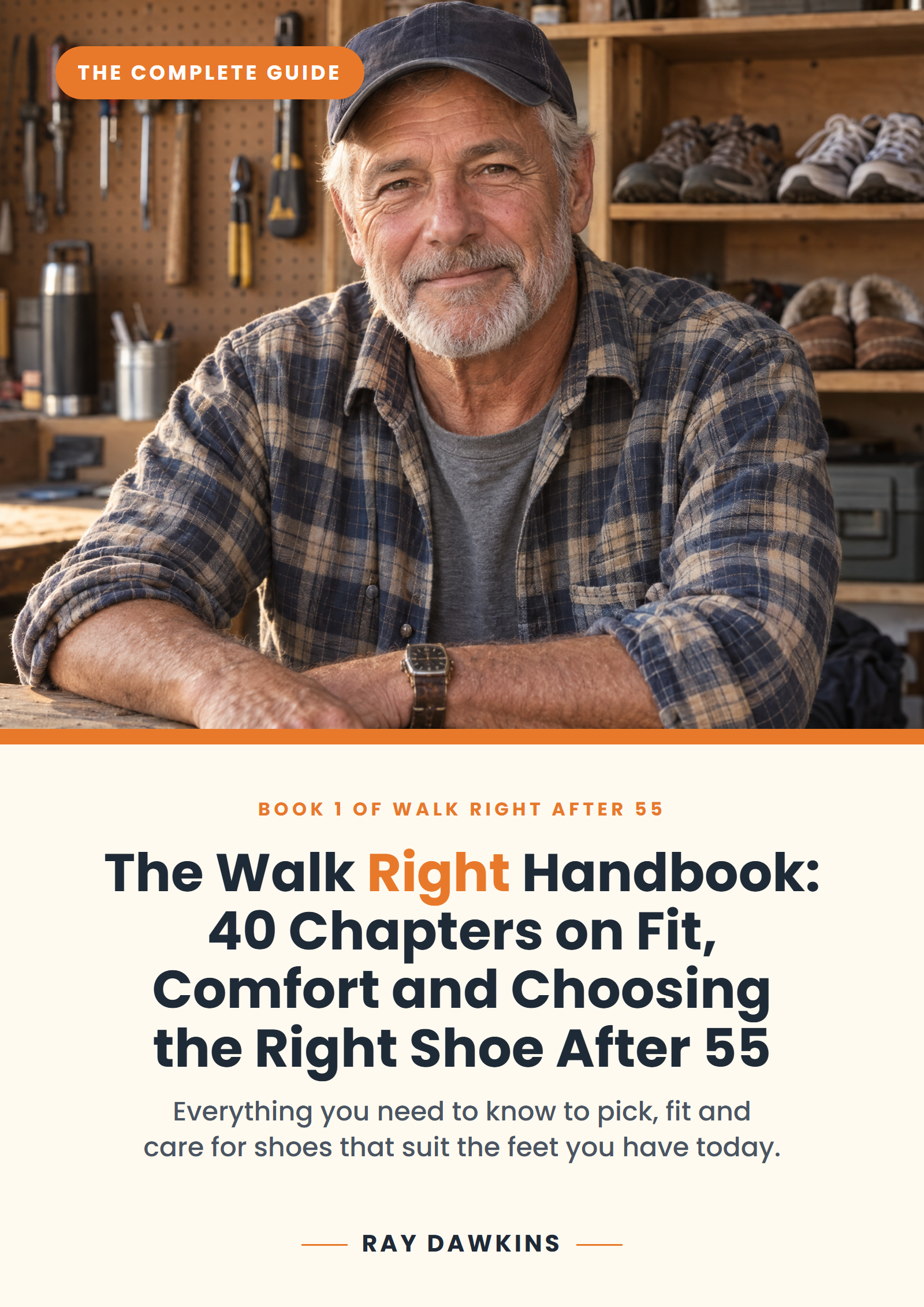
Everything you need to know to pick, fit and care for shoes that suit the feet you have today.
This is the complete reference book of the collection. It explains how feet change with age, how a shoe is built, how to get measured properly, and how to choose, care for and replace your shoes. Written for people who have worn the same size and style for decades and wonder why shoes just don't feel the way they used to. General information only, not medical advice.
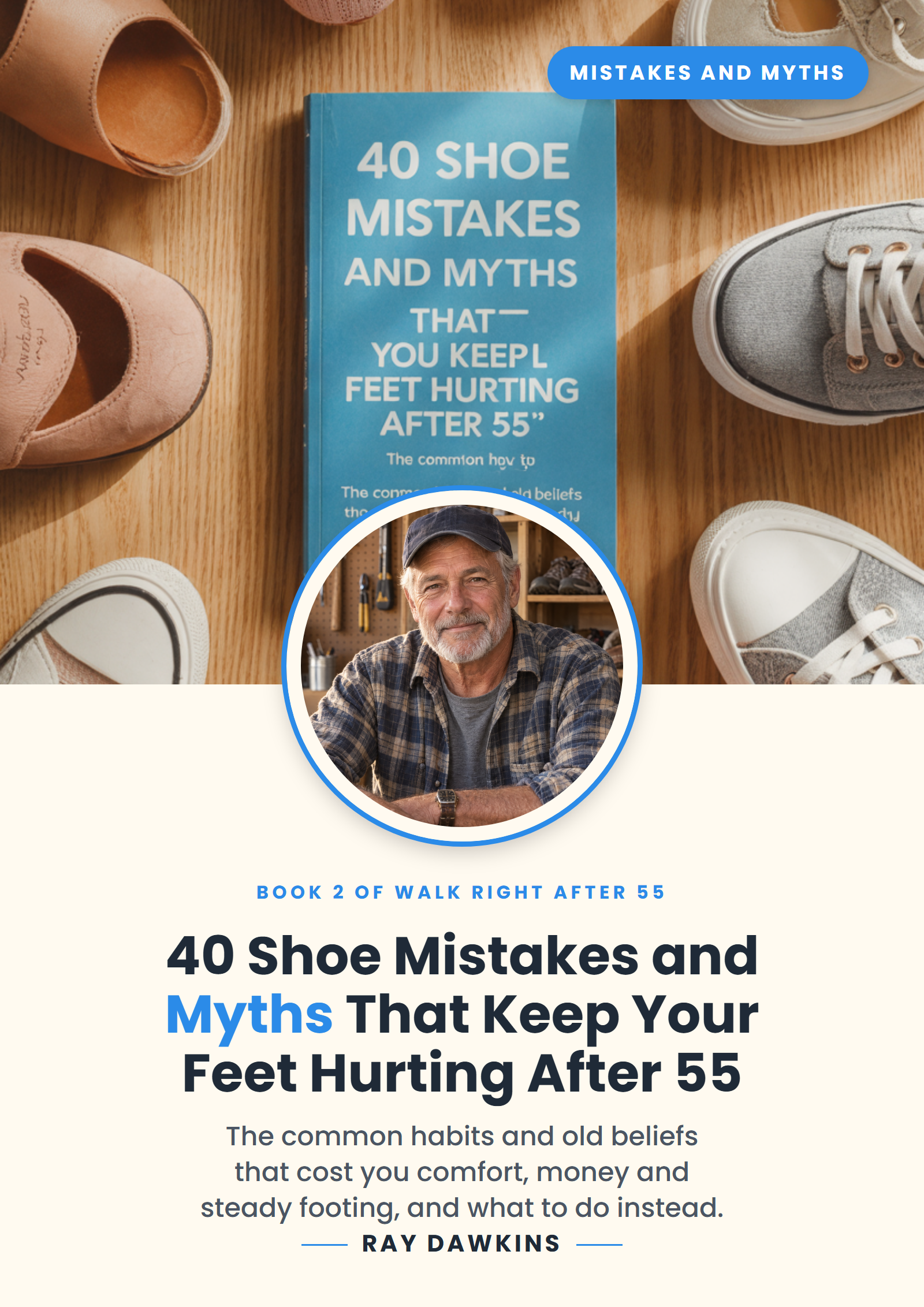
The common habits and old beliefs that cost you comfort, money and steady footing, and what to do instead.
Each chapter takes one mistake or old belief, explains why so many people hold it, and shows a better way. It is made for readers who keep buying shoes that end up uncomfortable and can't figure out why. No blame and no scare tactics, just clear, kind corrections. General information only, not medical advice.
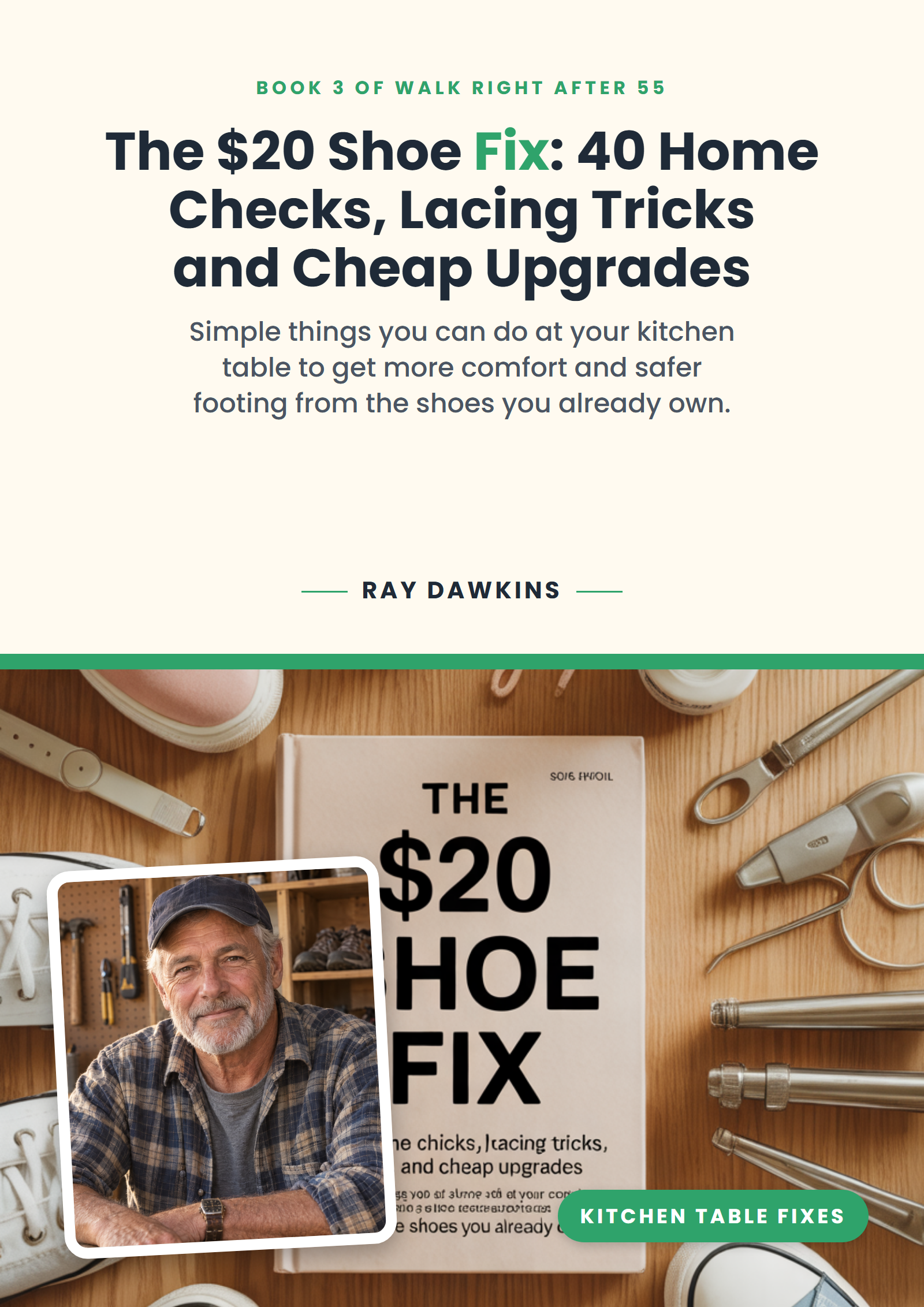
Simple things you can do at your kitchen table to get more comfort and safer footing from the shoes you already own.
This is the hands-on book of the collection. It is for readers on a fixed income who want more comfort and safer footing without buying a new pair, and who want to know when buying new really is the smarter choice. It includes printable checklists, a simple shoe log and a five-minute monthly routine. General information only, not medical advice.
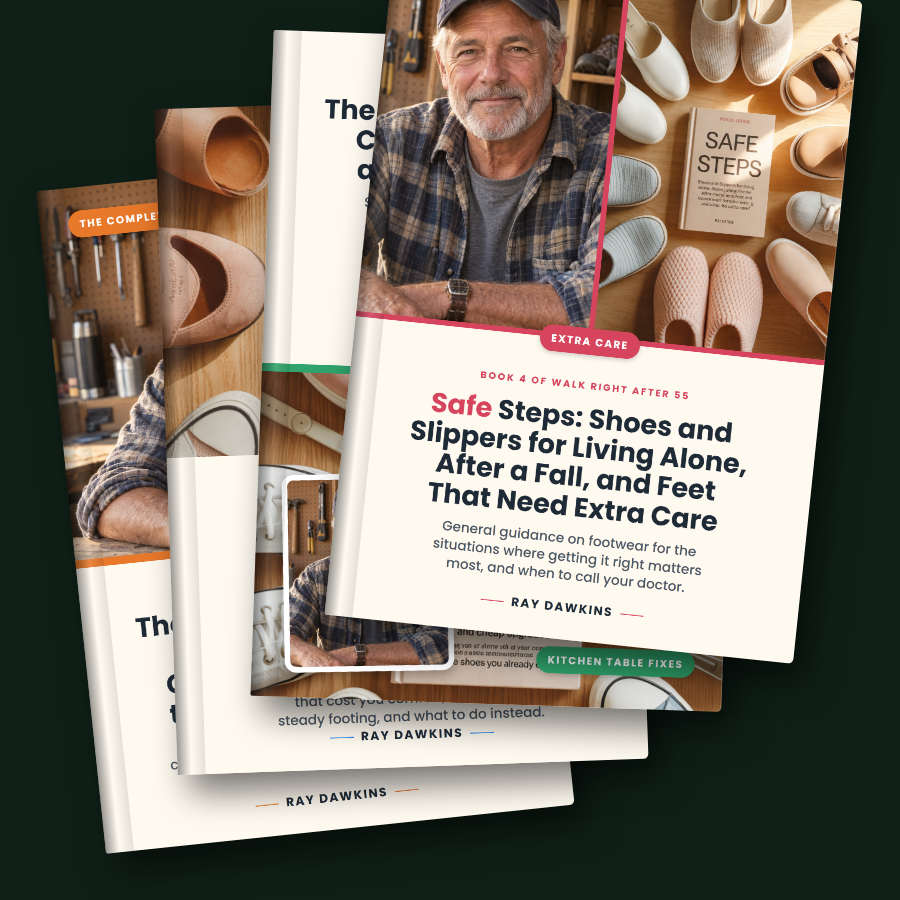
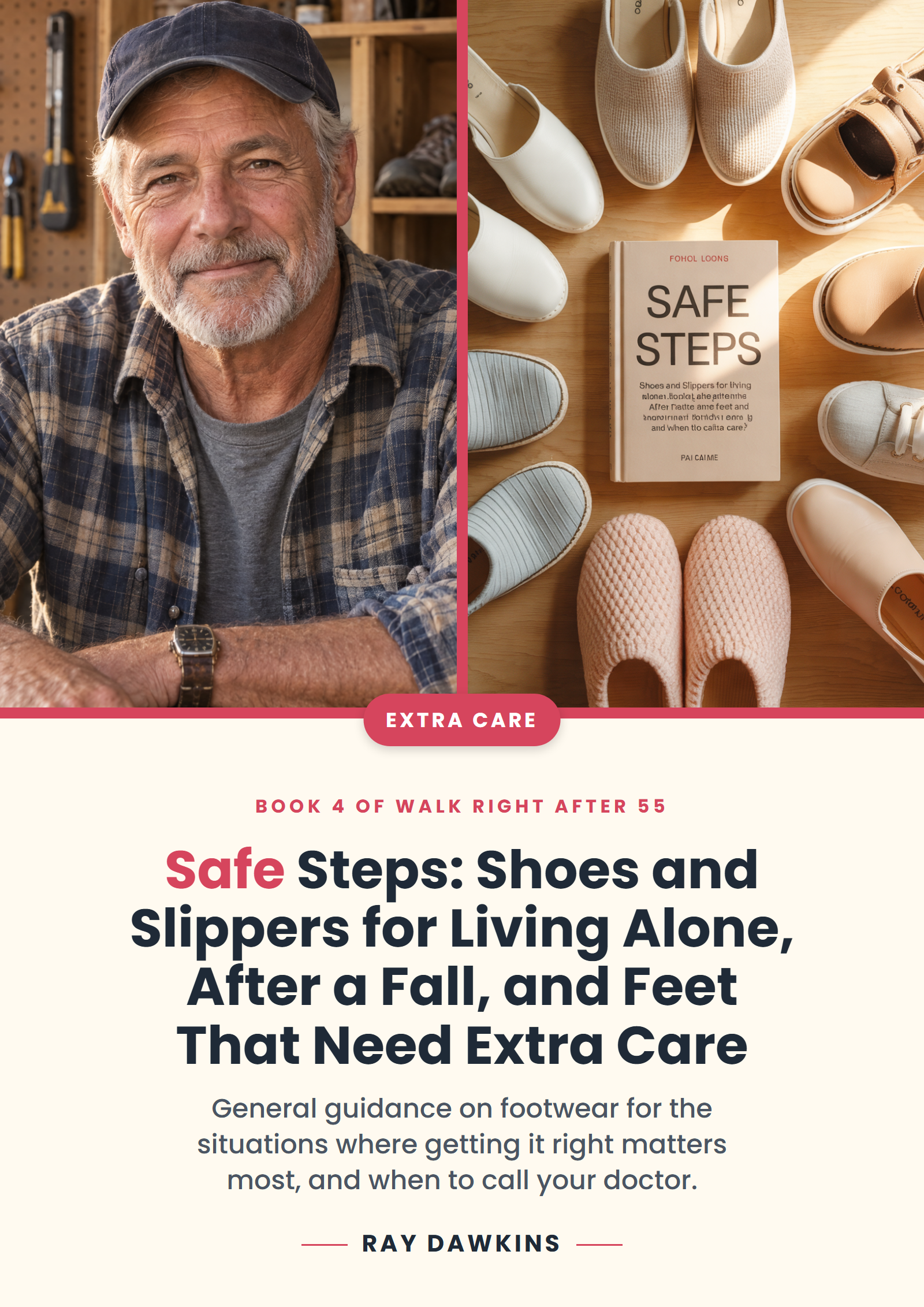
General guidance on footwear for the situations where getting it right matters most, and when to call your doctor.
This book looks at footwear for the situations where it matters most: living alone, recovering after a fall, caring for feet that need extra attention, or helping an older parent. It shares general information from recognized US sources and repeatedly points you to your doctor or podiatrist. Footwear is one part of the picture, never a substitute for professional care.
“You've walked a long way to get here, and you've earned a pair of shoes that treats you kindly.”
I spent my working life on the shop floor, helping people find shoes that actually fit. When I retired, I found I couldn't stop thinking about it. It still bothers me that so many people just put up with sore, ill-fitting shoes, as if that were part of getting older.
These books are for you if you're over 55 and your favorite shoes aren't so favorite anymore. They're also for you if you're careful with every dollar, or live alone and want to feel steady getting up in the night. And they're for you if you've had a fall, or if you're helping a mom or dad choose something safer and don't quite know how to bring it up.
I'm not a doctor or a podiatrist, and I won't pretend to be. What I can do is explain things the way a good neighbor would: plainly, patiently, with a bit of humor. When something calls for a professional, I'll tell you so.
Pick the one book that answers your question today, or take the whole set and have it all on hand. Either way, come on over to the fence. Let's get you walking right.
Free tips tend to be scattered, and a lot of them are really ads for a product. These books put everything in one order, one idea at a time, with checks you can do at home. They name no brands and carry no affiliate links, so nobody is steering you toward a purchase.
They are ebooks, so nothing ships to your door. After checkout you'll get access to your books. They're written in a large-print-friendly way, with clear headings, short lists and plenty of white space.
Yes. Each book stands on its own, so you can pick the one that fits your situation today. If you later want the rest, the full set is there too.
If you want the whole picture of fit, comfort and choosing shoes, start with The Walk Right Handbook. If you keep buying shoes that end up uncomfortable, try 40 Shoe Mistakes and Myths. If money is tight, The Shoe Fix book is for you. If you live alone, have had a fall, or help an older relative, begin with Safe Steps.
Adults 55 and older in the United States who want more comfortable, better-fitting and safer footwear. That includes people on a fixed income, people living alone, people who have had a fall, and family members helping an older parent.
No. They are general information from a plain-spoken neighbor, not a doctor or podiatrist. If you have foot pain, swelling, numbness, wounds, diabetes, circulation problems or have had a fall, please talk to your doctor or a podiatrist.
No. You won't find brand names, rankings or product picks. You'll learn how to judge fit, support and wear for yourself, so the advice still holds wherever you shop.
Just send us an email and we'll sort it out. We want you to be happy with what you bought.